Virginia Home Grown
Virginia’s Heritage Crops
Season 26 Episode 6 | 56m 46sVideo has Closed Captions
Explore unique crops from Virginia’s rich agricultural history!
Meet a fourth-generation farmer that practices a traditional sun drying process to cure peanuts. Learn how the Upper Mattaponi Tribe cultivates tobacco to use for ceremonial purposes. Engage with us or watch full episodes at Facebook.com/VirginiaHomeGrown and vpm.org/vhg. VHG 2606 August 2026.
Problems playing video? | Closed Captioning Feedback
Problems playing video? | Closed Captioning Feedback
Virginia Home Grown is a local public television program presented by VPM
Virginia Home Grown
Virginia’s Heritage Crops
Season 26 Episode 6 | 56m 46sVideo has Closed Captions
Meet a fourth-generation farmer that practices a traditional sun drying process to cure peanuts. Learn how the Upper Mattaponi Tribe cultivates tobacco to use for ceremonial purposes. Engage with us or watch full episodes at Facebook.com/VirginiaHomeGrown and vpm.org/vhg. VHG 2606 August 2026.
Problems playing video? | Closed Captioning Feedback
Where to Watch Virginia Home Grown
Virginia Home Grown is available to stream on pbs.org and the PBS app.
Providing Support for PBS.org
Learn Moreabout PBS online sponsorship(soft music) >>I'm actually the only person that I know of that's still doing these old antiquated ways.
At the turn of the century, every peanut farm looked like what I do.
Every peanut farm, because technology hadn't advanced to the point to where we are today.
Well, we don't want to forget the past because the past is the foundation that we stand on right now.
>>Today, we use tobacco to perpetuate our culture.
We're all tied around the tobacco.
Tobacco is that healing spirit of us being together, remaining together, keeping what we know as facts alive, and sharing that culture with our younger people who are just now learning our culture.
>>Production funding for "Virginia Home Grown" is made possible by.
>>Strange's Florists, Greenhouses and Garden Centers.
Serving Richmond for over 90 years.
With two florist shops, two greenhouses, and a garden center located throughout the Metro Richmond area.
Strange's, every bloomin' time!
>>And by Sally R. Youngs, In honor of the Grateful Deadheaders, Resident Interest Group.
And by.
(birds chirping) (upbeat music) (upbeat music continues) (upbeat music continues) >>Welcome to "Virginia Home Grown."
It's the perfect time to celebrate the summer as we transition the garden to fall crops.
Today, we're talking about heritage crops because Virginia has a rich agricultural history dating back to pre-colonial times.
Soybeans are the number one export crop of Virginia, and some are grown on lands in continuous cultivation for over 400 years or longer.
Whether it's classic crops or anything else you grow, send in your gardening questions at vpm.org/vhg.
We always enjoy hearing from you.
A little later, we will visit The Upper Mattaponi Tribe's cultural garden to learn about ceremonial tobacco.
But first, Randy Battle met Elisha Barnes of Pop Son Farm to learn about growing peanuts and a traditional method of drying them.
Let's get going.
>>I'm a fourth generation farmer.
My father, his father, his father, all farmed the land.
I was that one child that loved playing in this dirt.
>>Your soil is nice and tilled.
Is it sandy?
>>This is called sandy loam.
This area's soil is called sandy loam.
It is perfect for the raising of peanuts because of the sandiness allows the excess water to drain out, but the sandiness also allows the peanut pegs to penetrate, go into the ground and make a wonderful crop.
The good thing about peanuts is they love hot, humid weather.
>>We've had a lot of that.
>>And we've had a lot of that.
>>Yeah, so this crop looks amazing.
What do we call this?
>>Is it a stalk?
>>It is a peanut plant.
>>Okay.
>>It is actually a legume.
It grows its nut inside of a shell.
The farmer who farms a peanut has to be the most trusting of any farmer.
Because the peanut doesn't show you that it's doing anything until you dig it up.
>>Because it's underground.
>>It's underground.
>>So if you don't mind showing us where you're at right now with the peanut plant.
I know they're not ready yet, but at least we can see maybe a little something.
>>So if you will, we'll look down here.
>>Uh-huh.
>>And we have this peanut plant.
And we're going to try to pull it up so that we can get all that is already on the vine.
>>Okay.
Oh, wow.
>>Now, when we look under here, all of these little nodules here are going to be peanuts.
>>Okay.
>>We still have about six to eight weeks of growing time.
>>Okay.
>>These larger ones that you see here came on in the first to mid of July.
So that's about a month worth of growing right there.
>>Okay.
>>In another month, all of these will be peanuts this size.
So we've got harvest expectations somewhere around the last of September, maybe the 1st of October.
But we'll come out and we'll check the ripeness of each one and throughout the field to get an idea of when it would be the best time to dig them up.
>>Do you use a tractor or?
>>Yes.
I have a two row digger.
>>Uh-huh.
>>That digs two rows up at a time and it drops them right back down because in the shocking process, you don't want them turned up.
You want them turned down because you're going to place them on the pole with the nuts down and to the inside of the pole.
>>Now tell us a little bit about that shocking.
>>That's the shocking process.
>>Okay.
>>What we are doing then, we're putting them on those poles so that they can sit there for six weeks as they dry and cure.
>>Okay.
>>And one of the keys is to make sure that when you put them on the pole, that the nuts are hanging down and pointed to the inside of the pole.
>>Wow.
>>That way as it rains, the rain does not affect the nut as it's cured.
Because all of the water will take the path of least resistance around the outside of the shock, leaving the inside of the shock dry for the curing.
>>Now I understand that you are one of the only people doing this process.
Tell us about that.
How did you become the only one?
>>I'm actually the only person that I know of that's still doing these old antiquated ways because it is labor intensive, it is slow, and the volume or quantity is limited with what I do.
Other peanut farmers have adopted a modern technique, which is to harvest their crop and then dry them artificially.
>>Okay.
>>It only takes about 24 hours and they can dry them and put them on the market.
Where mine stay on the pole for six weeks.
That's what allows them to be so sweet and the quality.
>>As I grow my crops, I'm just a small backyard farmer.
But like you said, it's not about the quantity, but the quality.
And I feel great eating things out of my backyard garden because I know what I put into it.
>>And that should be the industry standard for us to know and put into what we're eating because we become a product of what we eat.
My thing is, I like to take it back to the bare basics so that I only put in what is needed.
>>Right.
>>I only treat what I see.
I don't preemptively strike on something.
I wait and see what comes up and then I address that need.
That cuts down on quantity, but it increases the quality.
>>And that's a good point that you just made.
You see the issue come up and then treat.
A lot of people start spraying different pesticides and different chemicals on their plants before they even see an issue.
And that can be a problem.
>>It can be a problem.
And that's why you see that my fields are not as, I guess you would call it clean as other fields, but because I wait until I see a problem and then I begin to address it.
>>And I understand that you do a lot of this by yourself.
>>Most of what I do, I do by myself because there are not many people who are willing to invest the time, the labor to come out here and do this because it is manual labor.
But the thing that I say to everyone is, if you don't have a passion for it, it's not something you're going to get into.
Because this is not about the volume of production, but the quality.
>>The quality.
>>Of what you produce.
>>Yes.
>>A peanut that no one else raises like I do.
My granddaughter is the one who wants to be a farmer.
She's been out here with me.
She plants crop with me.
She discs on the tractor with me.
She pull weeds.
We're trying to preserve the history because this becomes a part of you.
>>Right.
>>It is not something that you do for work.
This is something you do for love.
I have my family, my mother, my father, those that are in my community to thank for laying the foundation for where I stand on now.
>>And I understand you have a few sponsors and you guys give back to the food banks and things like that.
And you also have a partnership with the peanut company and it's going well for you.
Tell us a little bit about that.
>>It really has.
One of the things that has been my blessing is to have the partnerships with the food bank, with Hubs, with AMADAS Industries, with Peachtree Farms, myself, and we've just acquired new sponsorship by Willie Nelson and the Farm Aid.
They have come on board.
So what it does, it allows us to be able to give back to the community.
The corn that you see off in the distance.
We raise that corn and we give it to the food bank, and the food bank then distributes it to needy families all across the Eastern Shore and Southeastern Virginia.
So it is a way of being able to really help those that are struggling.
My father used to say it this way.
"Son, if you can raise enough to have some to give away, you'll always have enough for yourself."
And I live by that creed.
>>Thank you so much for that advice.
I will live by it as well.
And we thank you so much for having us here today.
We appreciate you.
>>Thank you.
>>And you keep on growing.
>>I will continue to play in the dirt.
>>That's right.
Play in the dirt.
>>That's it.
>>Native to South America and brought to the US by African enslaved people, peanuts now rank eighth in production here in Virginia in the nation.
And Elisha Barnes is one of the few growers who continue to dry peanuts with the old shock method.
The flavor is wonderful because the product itself is cured naturally.
And Randy, you had the opportunity to see them, and that must have been quite a thing.
>>It really was.
I was so happy to be there and everything was wonderful.
>>Well, let's look toward the future though, because peanuts bring us up to the future.
>>Yes, Peggy.
We're going to talk about our leafy greens.
We have some dinosaur kale and we have some curly kale.
And I want to let people know that you can take what you have and make it work.
So we have a couple of different containers, as you can see.
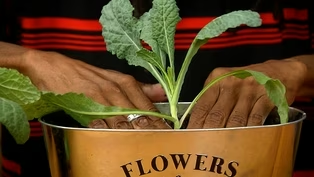
This is one that you can sit right on your balcony or your patio and take one of your transplants.
As you can see, these are four plants.
There are four cells, and a cell is simply the containers that the plants are in.
So we want to be careful not to harm them and get those roots out.
>>Yes, very gingerly and very carefully.
>>Yeah.
>>Be kind to those plants.
>>We have to.
>>Yeah.
>>If you be kind to them, they'll be kind to you.
>>Absolutely.
>>So as you can see, that root bulb is doing just fine.
I'm going to do one plant in this container due to the size, and I'm going to break up that bulb.
And just gently place it in there just like so.
>>Yeah, we break it up so for those roots.
>>Yeah, they can easily move around and spread out.
Now, now do you grow leafy greens?
>>I do grow leafy greens.
>>Okay.
>>I grow the traditional, I'll say, lettuces and things, but I also enjoy growing kale, different types, the dinosaur as well as the curly.
And I also grow a few collards in my garden.
>>Okay.
Okay.
So as we could see, nice, easy.
It doesn't take a lot of work, you guys.
>>Nope.
Nope.
But what happens if I don't want to plant it in a container, Randy?
>>If you don't want to plant it in a container, we're going to act like this is our garden bed.
>>Okay.
>>So you could probably get two in here because they grow really big.
>>They do grow very large.
>>Yes.
>>Yes, and they fool you by being so small in that container.
>>Absolutely.
So we're going to take another cell, break up our roots, gently put it in there.
Take another one.
Break up our roots that goes in there.
>>But Randy, those are a little yellow.
Why is that?
>>Well, sometimes the plants need a little fertilizer, you know?
Not all of them, but sometimes when you start to see the yellow coloration, you might want to give them a little boost just to increase that nitrogen and get them back to their green state.
>>Right, I like a all-purpose slow release organic-based fertilizer.
>>Yeah.
>>Something nice and easy that's also good for the soil too.
>>Absolutely.
>>Yeah.
>>So that's all it takes when it comes to planting your leafy greens in a container or in your garden bed.
>>But what happens if I buy my containers and I don't have time to plant them in my garden, but they're so tight in that container, I need to get them out.
What's something I can do?
A stopgap?
>>I would say get you one of these little shovels and slowly dig around that container to loosen up that soil and gently remove that plant and put it into a larger container so that it can grow and expand and give you more production.
>>Right.
Lots of roots give lots of shoots.
>>Absolutely.
>>Yes.
So these plants here, you know, as well as the collards and such, those are sort of our future to production here in Virginia?
>>Yeah, they've actually increased quite a bit as far as production.
More people are eating more healthy.
They're using them for more different things like juices and different salads and things like that.
So yeah, they are one of the crops of the future.
And we just don't know how far they are going to go.
>>Well, it'd be exciting to see where they land.
>>Yeah.
>>Yeah, because right now they're in our gardens.
>>Uh-huh.
Yeah, you got that right.
>>Well, thank you so much, Randy, for demonstrating and sharing about greens here in Virginia.
>>Thank you for having me.
>>Yes.
And now we're going back to Elisha to answer questions that you've sent in.
>>Elisha, today we have some viewer questions, and maybe you can help us answer them, because you are the peanut expert.
So the first question we have is from Mary.
She wants to know, what other crops do you grow besides peanuts?
>>Well, I grow peanuts, I grow watermelons.
I grow sweet potatoes, I grow cantaloupe.
I grow sweet corn.
Depending on the opportunity that I have to picking, I grow butter beans.
I grow snap beans.
>>Okay, a variety >>It all depends.
of different things.
>>A variety.
Okay, now we have.
Dave wants to know, can peanuts over-winter in the ground?
>>You don't really want to do that, because a percentage of them will deteriorate over winter by freezing and what have you.
>>Right.
You will still have some that'll come up volunteer.
But if you want to really take your peanut and carry it, dig them up, pick them off, let them dry.
And then once they're cured, put them in a bag, and put them in your refrigerator.
>>Okay, okay, good advice, good advice.
All right, this question comes from, I think Jennifer.
Can peanuts be grown in a container on my balcony or deck?
>>Absolutely.
And one of the keys that you want to have that need full sun, you want to have it well-drained soil.
So if you have them in a container, make sure that there are holes drilled in the bottom so that the excess moisture can drain through.
Peanuts do not like their feet wet.
>>Right.
>>They'll get the moisture that they need and then the drought.
Peanuts by themselves are a hot, dry weather crop.
>>Okay, so they prefer the heat.
>>They prefer the heat, the humidity, and the drier soil.
>>Okay, that's good to know.
Now we have, do pollinators play any role in growing peanuts?
>>Peanuts predominantly, there is a small process of pollination, but they are, that's why they do like they do.
They will grow, and even at that one point, they don't need any outside.
They will grow right by themselves to pollinate.
>>Okay.
>>And get their their thing done.
>>It is almost like self-pollinating.
>>And almost self-pollinating.
>>Okay.
>>So that it does its thing while you are up here doing your thing.
(Randy laughing) >>All right, let's see what else we got.
Are there any crops that make good companion plants to peanuts?
>>Peanuts actually grow better just with themselves.
>>Okay.
>>Because of their tendency to spread and to put pegs down all around that growth zone.
So they don't really need anything or do well with anything extra in the ground.
That's why most of your farmers do not want any weeds, any grasses, anything other than the peanut in the peanut field.
I tend to look the other way and say, well, I'm not trying to get the most peanuts.
I'm trying to get the best peanut.
>>Right, okay, that makes sense.
Thank you, all right.
I think we have a couple more questions.
Okay, this is a good one from Mike.
He wants to know, how do you know when the peanuts are ready to be harvested?
>>Well, we do a spot check.
We know that they're going to have a growing season that starts concluding about the mid of September through the first, second week of October.
So that's your window.
And to know when they are completely ready, we'll take this same peanut, we'll go through the field, and pick up about five or six different spots, and we'll pull that peanut up.
And then we'll take all of the full nuts, put them in a pile.
And once we've done that, when you pull that stem off, if you scrape the end of that, it'll be a dark color as that peanut is ripen.
As long as it's not that dark color, it's not yet fully ripened.
>>Okay, and those months that you just mentioned, that's for here in zone seven?
>>In this sun, right.
>>Okay, so they just need to make sure they check their zone.
>>Identify their zone.
Because remember, that peanut's going to need heat, and they're going to need sunlight.
>>Right.
>>So when the temperature starts to get cool, the peanuts are going to try to fast ripen, so that you might have to dig them early.
>>Okay, okay, that makes sense.
And our last question is, what are the most common pests and diseases that affect peanuts?
And we were just talking about that earlier.
>>Peanuts are plagued with a host of diseases and all.
Some are soil-borne, scleractinia black root rot, white mold.
All of these are soil-borne things.
Then you have leaf spot, which I have to spray for the leaf spot.
But if you can keep your soil healthy and well-drained, you don't want it standing with a lot of moisture, then you can minimize the amount of soil-borne.
But then even if you do have soil-borne diseases, there are some additives that fungicides and all that you can spray on that would knock down those diseases.
Case in point, when you have a severe scleractinia outbreak in peanuts, it can wipe out a field in short order.
Because it grows so prolific during the moisture, during the nighttime, it's steady.
The fungus is just mold is just steady growing.
>>Okay.
>>Another one is white mold that does the same thing.
And so you have to scout your field on a regular basis.
>>Yep, just stay up with it and keep your eyes on it.
>>Keep your eyes on it.
My father used to walk through the field and we couldn't figure out why.
And now I find out you have to.
>>Yeah.
>>You have to scout your land.
>>Yeah, I check my garden every single day.
Thank you so much for answering these questions.
We really appreciate it.
>>Well, I thank you all for having me.
(fast clicking) >>Today we're talking about sunflowers.
They are an iconic American beauty.
They're native to this continent, and they're actually grown on every continent on earth now.
These here, this is a Hopi Dye sunflower.
There's many different varieties, and you'll see many different varieties around the farm today between bright orange to a pale lemon chiffon yellow and everything in between.
Different sizes, different shapes, different ways of growing.
They've got many different forms and habits from bushy sunflowers like this to very tall uprights.
They're an excellent plant to use in your garden if you're going to have kind of a wild flower garden with different stories to it.
Because they'll give you height and then you can bring in your medium and your ground cover plants below it.
It makes for a beautiful landscape.
They're excellent for birds and bees.
If you're a birder, they will bring a bouquet of color to your backyard.
So you really get a great view of that wildlife.
And they're excellent for our bees, including mason bees that are native to Virginia.
There are actually native Virginian sunflowers.
They're called Sunchokes, and they are a perennial sunflower, and they put out very delicious tubers that you can bring up from the ground in the fall.
And they're very high in fiber and natural insulin, so they're a very healthy food.
We've got many different kinds of sunflowers.
This guy right here, he is a Russian Mammoth, which the name kind of is a misnomer.
Russian Mammoths are originally from the United States.
And these guys are great, because if you're going to get into seed saving, this is an excellent plant to start with.
It's not intimidating, there's no special process to it.
And basically all you do is cut it down when they're about this size, and you're going to cut it as close to this as possible.
You can remove some of this extra tissue, so that you can fight possible fungus if it's a little bit rainy when you're drying them out.
You want to make sure they're very dry, because the fungus can affect the germination rate of your plants.
And peel all this extra stuff back, and see how easy they come out.
They're excellent and so easy to do.
And you can make little gifts for your gardening friends for next year or for those people that have everything, to package up and give away your own seeds.
And the wonderful thing about that is you can cross-pollinate different sunflowers to create your own varieties in different colors and sizes and really play with them.
They're very easy to work with from season to season.
And it's such a simple process.
There's nothing that needs to be done, no special equipment.
Sunflowers are just absolutely fascinating plants.
They play a major role in our agricultural economy from everything from animal feed, sunflower oil, to sunflower seeds that you get as a treat.
And sunflower nutmeats can be made into a flour to be used in baking, which is a great alternative for people that have celiac disease.
It's just a little bit hard to find.
Sunflowers are such an easy addition to your garden.
As long as they have some sun, they require very little care to grow.
And they really are a jewel in the garden, and you can't help but smile when you look at them.
So if you haven't put them in your garden in previous seasons, I definitely suggest picking up a few packages at your local nursery supply company and try them out.
They are fantastic plants.
>>I am a fan of sunflowers.
They are valued as a native pollinator plant, a nutritious food for birds and people alike.
And now they're being grown by farmers as a beneficial break in multi-year crop rotations.
They're such a joy to grow.
Next, we will tour the cultural garden at the Upper Mattaponi Tribe's Headquarters in King William to learn about their traditional tobacco grown by Virginia's Indigenous peoples with Chief Frank Adams and Nokomis Custalow.
Let's take a look.
>>When someone built a canoe, they would bless the canoe with tobacco.
When they put their drum together, they would always bless the drum by sprinkling tobacco on the surface of the drum.
When we have powwows or dances or visitation from other tribes, first thing you do is, is everybody's got tobacco in their hand, or in their pocket or in the pouch.
Everyone sprinkles a little bit of tobacco on the ground to just cleanse the area as we dance to celebrate everything.
Culture, celebrate harvest, celebrate the coming of fall, celebrate the coming of spring.
And when we put tobacco down, we don't make a big showing of it.
It's kind of a one-on-one thing with yourself and the great spirit, the creator of all, yes.
So it's a spiritual thing just to get yourself in the right place before you dance, you speak, you make decisions.
And we depend on the tobacco just for peace of mind.
But we know, and it's passed down from ancestor to ancestors, generation to generation, that this is a central part of any village is to have some spiritual tobacco.
>>Nokomis, what's the theme of this garden?
What's its purpose?
>>The purpose is understanding our foodways as well as medicinal plants.
This is actually the three sisters that we're growing.
The corn, bean, and squash.
Gives us an understanding how they all three grow together, and why they work together so well.
>>Right.
>>Right in front of us, we have another food way, the blackberries.
You can eat this in many different ways or puck them off or a snack.
>>Yeah.
>>Right over here to your right, we have milkweed.
>>Milkweed.
>>Absolutely, not only does it attract our monarchs to have that pollination to grow more, but it's a fiber.
Not only the milkweed is considered a fiber, around the corner, you also have Dogbane.
>>Yes.
>>Both of these plants create cordage for our community to either make fishnets or baskets to put our corn in.
>>Yeah.
>>And then right here we have the star of the show, the ceremonial tobacco.
>>Yes.
>>Absolutely.
So this is a Nicotiana Rustica.
This was more commonly used by the indigenous people of Virginia.
So as you notice, it's starting to get brown here that it's going to be the seed.
So we start plucking those off when it's ready to grow more each year.
It's also meant for ceremonial compared to the tabacum that Europeans are bringing over to the Americas.
>>Absolutely, you know, it's a fascinating plant.
Because people just don't understand there's such a difference between the ceremonial versus the commercial plant.
>>Correct.
>>You know, it's nigh and day almost.
>>Absolutely, so when it comes to ceremonial, the examples of that for indigenous people would be more for communicating and sending message to our deities.
We would call our deities creator or God, Ahone, which is one of many words in our Virginia Algonquian languages we're learning here.
For the tabacum that English is bringing over, they're more for industrial reasonings.
I'm here for the money, right?
>>Yep, exactly.
>>So they're just trying to figure out how they can work with the indigenous people to make a little bit more money in their pocket.
>>Right, so they actually grew a different tobacco too.
The leaves are larger.
Actually, it's more subtropical too, because it grows from zone seven down to zone 11.
>>Absolutely.
>>Which is Virginia, of course, down to Florida.
While this tobacco, the ceremonial tobacco, they can actually grow in zone three up in Canada.
>>All the way down.
>>All the way down.
Yeah, it's a shorter growing season.
>>A little bit.
It can also kind of tolerate a little bit of frost, but for the most part, both definitely needs warm, humid air.
>>The optimum place is in Virginia, right here.
This is where it grew the best.
Back in the day we traded tobacco for other things that we didn't have available here.
We walked to the mountains to get flint to make arrow tips and tools, but we had to trade for that.
They didn't just give it.
We didn't have money to buy it, so we took tobacco with us, and we traded tobacco as well as beaver pelts and hides just so we could haul the stones home to make our tools.
The Europeans came in and they commercialized the peace pipe and things like that.
But for us we didn't use tobacco, smoke tobacco on a daily basis.
It was only in ceremonial things that we even would dare even partake of tobacco.
And the tobacco we grew was extremely potent.
Even when we used that tobacco, we would cut it with other things, such as cedar bark or pine needles or whatnot, just to take the harshness and the hallucination effects of the tobacco.
>>Nicotiana rustica is a little bit of a biting taste according to the English.
A little bit stronger, higher in nicotine.
>>Much higher, actually.
>>And then for the tobacco, it's more milder, more sweeter.
That's what they would have preferred to have in that economy for our landscape.
>>I understand the nicotine content of this plant is close to 9%.
Very, very high.
>>Very high, which is why the English chose theirs specifically.
>>Yeah, that nicotine content was actually down to 3%.
But I think too, as a plant, we get confused with it, and we try to take the commercial tobacco, and sort of in our mind put it in place of the ceremonial tobacco.
And the use, the culture, everything beyond is completely different.
>>Yeah, we don't use it as a greed.
It's more for communicating and sharing with one another, sharing space.
When it comes to modern ceremonies or powwows, for example, we will pray over that circle.
It's just a way to kind of get that bad energy out of the area before we enter and show all of that positivity to show and educate to our community.
>>So if I wanted to plant this at home, what would it require?
>>Yeah, so after the last frost, you will plant it in well-drained loamy soil.
There's some indications when it's time to get a harvest throughout the leaves, whether it's from bottom into the top, you'll see some yellow on it.
That's the time you can start plucking the leaves.
Or another indication is the brown buds.
Those are the seeds.
So throughout the season, you can start picking them slowly but surely in order to plant those for next year.
>>Fantastic, I'm hoping people have now learned, particularly that this tobacco here is nothing like our commercial tobacco.
And the symbolism and the I'll say the sacredness of this plant to the indigenous people is not one to belittle.
It's basically almost a circle.
>>Right.
>>The center of that circle.
>>Absolutely, we want to try to hold on tight to what we have.
This is one of many ways that we're trying to bring back to our territory, our environment, and our communities.
You know, trade happens a lot.
So the tabacum has a pink flower, much broader, much larger.
It's not bad that we grow that, but when it comes to kind of showcasing culture and what that means to us, we want to kind of stick to who we are, and what it makes more sense to us.
>>Yes, and I'm sure you have children working in this garden.
>>Absolutely, just recently, back in April, they do it every year.
We have what is called Family Planting Day.
We start off with seedlings that our coworkers start off here first, and then we bring the families in of the tribal communities.
We kind of tell a story about it, talk about it, and the purpose, and then we have them get their hands dirty in the soil, and just have a good time with family, and a good space for each of one of us.
>>I can't think of a better place to be with my hands in the soil.
>>Absolutely.
>>And cultivating something such as important as this.
Thank you so much for sharing.
And thank you for just even enlightening me about the differences.
I had no idea, and I've learned so much through you.
>>Absolutely, I want to say KeNah, thank you in our language, as a way of having this opportunity to be able to showcase what we're doing here.
>>This is what we are, this is who we are.
This is why we're here.
Tobacco is a huge connection that we don't want our youth to lose the idea, or the knowledge of how to grow and nurture, and the value of being able to put your hands on some native tobacco that just can't buy in a store.
And it's a connection with the land, mother earth.
If you can grow tobacco, the tribe will always prosper and be alive.
>>Sacred wild tobacco is a revered medicine and a spiritual bridge, and it's very different from commercial tobacco, which is why I feel these stark differences define the Indigenous culture.
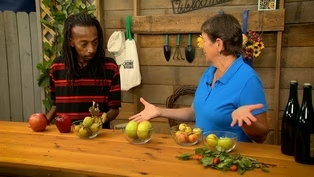
And Randy, talking about culture, apples are also part of our culture, and I dove into the apples of Virginia and was fascinated to learn that we had two native crab apples here in Virginia.
>>Oh, wow.
>>Yeah, our sweet crab apple, which looks a lot like this one.
Okay?
>>Okay.
>>But also our southern crabapple.
And also to learn that colonists brought over plants by seed the apple plant.
And again, anything made from seed, as we know, that's open pollinated.
It's random as to what you're going to get.
And these apples here are kind of representative of the crazy apples that came from that seed from the colonists.
>>Okay.
>>All righty?
But then here in Virginia, back on the crab apple front, this Hewe's Crab apple came about through genetic, you know, variation with the seed.
And this one here actually was an excellent cider apple, to the point that Thomas Jefferson said that when this was crushed, he could almost see the liquid gold going out of it to make wonderful cider.
>>Wow.
>>Isn't that kinda cool?
>>Yeah.
>>'Cause we have to understand that back in the 1600s and 1700s, cider was the primary drink.
It wasn't about the alcohol.
It was about the nutritious value of cider, because who knew what was in that water?
But the cider was definitely pure and safe to drink.
Plus, it had lots of vitamins, had antioxidants, as well as other wonderful benefits of health, okay?
>>Right.
>>So, while we were busy here in the colonies, messing with apples from the seed, over in France in the 1500s, they developed this Southern Rambo apple, and it's one of the few apples of the time that people could eat, called a table apple or dessert apple.
>>And you said the 1500s?
>>1500s.
>>Wow.
>>Yeah, but it didn't get to the colonies until the mid-1700s.
>>Okay.
>>Took some time to get here.
But here in the United States, or I should say in the colonies, they were still busy with apple production here in Virginia.
And in came the very famous Pippin apple, but it first started on Long Island, and then it came here, and it grew so well in the Blue Ridge 'cause of the terraforma, 'cause of gorgeous soil, gorgeous weather, like everything else.
It thrived and it became a cider apple, very well known and connected with Virginia, along with our Winesap.
Now, the Pippin got renamed to the Albemarle Pippin, but the Virginia Winesap, which heralded from New Jersey, was also renamed because it did so well here and became connected.
Isn't that kind of fun?
We stole two- >>Yeah.
>>And took 'em as our own.
(Peggy laughs) >>Yeah.
>>But they also made wonderful ciders.
>>That's awesome.
>>But again, back over on the other side of the pond, we have some more table apples being developed.
And this one here, Pitmaston Pine Apple, because it really tastes like a pineapple.
It has a pineapple flavor to it.
>>Oh, wow.
>>And this is in the 1800s that these apples are starting to really be developed, and it's through the 1800s that we shift from cider and baking and drying and cooking with apples to also eating them as dessert and as a table and to pick up and munch on like you and I do.
>>Right.
>>But also, the advent of refrigeration helped that come along.
So, what we don't know, or what people don't know, is that the Red Delicious, okay, in the late 1800s was developed in Ohio.
And it became a smash because it has a thick, leathery skin so we could keep long, and they could hold it in storage and refrigeration.
And it became America's number one apple in the early 1900s.
>>Wow.
>>But to circle this back to Virginia, there's another fun apple story that we connect to, okay?
In 1790, we're back into Thomas Jefferson era, there was an apple introduced called Ralls' Genet from France.
It was a phenomenal apple with wonderful flavor, really good crispy tartness, but it didn't keep long.
And so, actually, a pomologist in Japan in the 1930s took the attributes of the Red Delicious with the thick skin and the fact that it could keep long and crossed it with the Ralls' Genet from 1790.
>>Oh, wow.
- And brought in an apple we enjoy today, and drum roll, it is the Fuji apple.
And the Fuji apple was introduced in the 1930s.
>>Beautiful.
>>And to think that the genetics of the Fuji apple goes back to a Virginia apple, that Ralls' Genet.
Isn't that kind of fun?
>>It is amazing.
>>So, whenever you pick up a Fuji apple, think about what you're eating, and that you're eating an apple that was developed here in Virginia, as well as one crossed in Ohio overseas in Japan for us to enjoy.
When you get into the stories of apples, it's just fascinating.
I had so much fun researching all of this.
>>It is so awesome.
>>Yes, it is.
It's a fun story, anyway.
>>It is.
>>Well, I'm gonna say that now, we're gonna go back to King William County, okay?
We're gonna go back again and sit down with Jen Alexander, the manager of the garden, to answer the questions that our viewers have sent in.
And I'm just gonna remind everybody, you can submit questions anytime at vpm.org/vhg or at Facebook 'cause we always enjoy hearing from you.
So, Jen, our first question is about tobacco and it's about crop rotation practices.
Do you use those with growing the ceremonial tobacco?
>>Oh, yes.
Definitely, because tobacco and the ceremonial tobacco, the Nicotiana rustica, is in the Solanaceae family, which is also tomatoes, eggplants, peppers, potatoes.
So, you do wanna have the crop rotation because you don't want any diseases to build up, especially like tobacco mosaic disease.
>>Oh, yes.
>>And you do want to be able to amend the soil in between each planting, so space it out about two or three years when you're rotating.
>>Yeah.
And I was gonna say, about the diseases, what are some of the more common diseases that a tobacco plant would get?
'Cause that's another question we have.
>>Yeah, so the really bad one is that tobacco mosaic disease.
>>Yes.
>>So, (sighs) that can transfer by hand.
It can be on the seeds.
It can be on your clothing.
>>Oh my.
>>It can be on the tools.
>>Mm-hmm.
>>And it is something that does not go away easily.
Like even if you spray your tools with, like, the 70% alcohol, that's not gonna do it.
>>Right.
>>You're gonna have to have something stronger or even boil your tools.
>>Yeah, even tomatoes can get that disease.
Just be very- >>Yes, they can.
>>Be very careful in handling them, yeah.
>>Exactly.
>>Particularly if you're a smoker.
You need to be very aware of that.
>>Yes.
>>Do you do... We talked about soil depletion and the importance of it, but how does that tobacco actually, you know, I imagine it's a heavy nitrogen feeder.
>>It is.
>>Which is why you've got to keep amending that soil.
>>Yes, so it does- >>Yeah.
>>Have a tap root, but then it has these fibrous roots also that are kind of in that top eight to 12 inches that are gathering those nutrients.
So, yeah, you do want to amend with a compost and do an organic fertilizer that isn't gonna be washed away as easily as a water-soluble fertilizer is.
>>'Cause another question we have here is, with all the rain that's been coming and going, it's become very difficult for people to keep their plants green and flourishing, particularly in a container, so how would you recommend people kind of attack that challenge?
>>Yeah, if it's in a container, you probably wanna do a little mulch on top, a little compost on top to hold it in there a little better and not let the rain get to it as strongly as it would if it was just soil on top.
And then just amend- >>Yeah.
>>As much as possible.
>>Plus, also reach for the organic slow-release fertilizer.
>>Yes, slow release.
>>Yeah, avoid those salts and those water-soluble fertilizers.
>>Definitely.
>>I know they're so easy, but- >>We worry about that a lot, the salts, because we have two high tunnels.
>>Ah, yes.
>>So we have to do organic in there so that the salt isn't building up and killing the plants.
>>Mm-hmm, I've been using a lot of fish emulsion lately, too.
>>Mm-hmm.
>>I know it smells dreadful, but it's a good one with all this rain that we've been having.
>>It's funny you mentioned that because we just had (Peggy laughs) a great program on making your own fish fertilizer.
>>Oh, interesting.
>>So, Environmental is catching the invasive blue catfish out of the Mattaponi River.
>>Fantastic.
>>And then we have a little station where you can clean your fish, and then we have barrels and molasses ready as well as a grinder.
>>Mm.
>>That's fun.
And now, we have buckets of fish fertilizer.
>>Oh, that's so good, and it's such a good fertilizer.
It truly is.
Another question we have is about mountain mint.
>>Mm-hmm.
>>And it's Renee who sent it in, and her mountain mint is falling over.
And yes, it can get tall, but what do you recommend?
>>So, you can do what's called a Chelsea chop.
And in the springtime, once they get up about your knee, you can cut them in half.
>>Mm-hmm.
>>And then they won't grow as tall and they'll be a little stronger.
You can also, when you're doing native plants, they all support each other.
>>Yeah.
>>So planting things around them as well can help support it.
>>Right.
I think just putting it in a container by itself, it needs its friends to help stand up, huh?
>>Right.
>>Yes, so many plants, and we do, too, actually.
(laughs) So, speaking of native plants, do you have any other recommendations that people could put in their gardens?
>>Oh, goodness.
As far as what we've got in the cultural garden, sunchokes are great because they're edible.
You harvest the roots.
You can do that in the fall.
Treat it like a potato.
>>Mm-hmm.
>>Boil it.
Or if you want it a little sweeter, you can even leave it in the ground till spring and harvest it then.
But it's a beautiful flower.
Kind of sunflower-looking.
>>That's a very good recommendation.
Not one people think about very often, so thank you.
>>Yeah.
>>Speaking about harvesting, I'm gonna swing it back to the tobacco briefly.
The curing of the tobacco, you know, that's such an important step.
Growing the plant is important, but then the curing of it.
How, in this humidity, do you tackle that?
>>It's difficult in this humidity because even inside, we still have humidity in there.
We're running a dehumidifier all the time.
We have a commercial dehydrator, which we don't use for the tobacco, but for other things, and things aren't drying out as well as they should be.
>>Mm-hmm.
>>But just keep it cool, dry place.
And then, like, basically, the combination of your temperature and humidity shouldn't be above the number 100, but your temperature can be, like, 60-ish, 70-ish.
>>Mm-hmm.
>>Your humidity can also be at the top 60-70.
>>Right.
>>And you wanna lay those out.
I like to harvest weekly as opposed to waiting- >>Okay.
>>And having those top leaves mature and then taking the whole plant.
Because as humid as it is, you don't want those leaves laying on each other.
>>Oh, no, yeah.
>>Kind of spread them out and let them dry.
>>So you actually probably get a bumper crop by continually harvesting, 'cause that's another question, is when and how do you harvest, and why do you harvest, yes?
>>Yeah.
Just as far as harvesting those leaves, as they start to yellow means they're ready.
>>Mm >>And then it's just easier to do it weekly.
>>Rather than to wait till the end.
>>Right.
>>Isn't that the case with everything?
>>Right.
(Peggy laughs) And if you're doing it weekly, then that means less pests and less disease getting to the leaves.
>>'Cause you're opening up for air circulation- >>Correct.
>>As you're harvesting those leaves.
>>Yeah, that is so important in a humid environment.
>>Particularly in the Solanaceae family with all of those plants.
>>Mm-hmm.
>>Pull those leaves off of the bottom, get that air circulation.
And even if it's not tobacco and you're not harvesting it for ceremonial use, so.
>>Right.
In the high tunnels, we single stem our tomatoes, but we still make sure we prune up so that the air can get through.
>>Yes, I do the same thing.
Jen, thank you so much for answering these questions.
I appreciate you being with us here on the show again.
>>Thank you for having me, Peggy.
>>Yes.
(lively percussive music) >>Today, we're here, pruning blackberries in my upper garden bed.
This time of year is a perfect time to be pruning your blackberries, late summer, early fall, where you're able to see a lot of that big growth from your first-year primocanes, and also able to tell which of your second-year floricanes are ready to be trimmed to the ground.
Blackberries, I love to use in jams, jellies, sauces, fillings, as well as being able to garnish cakes, carefully choosing which leaves and, like, berry stems to choose because this one is a thorn variety.
There are thornless varieties, but the green pop on cakes as well as the fresh berries.
With the jam on the inside, it's my go-to.
I love being able to incorporate that fresh component on top and then the cooked stable component on the inside.
But I digress.
The blackberries here we planted last year, so we don't have any trellising for them.
I wanted to make sure that they were going to be successful this year.
The primocane, you're able to tell that it is your first-year growth because there are five leaves.
Here, since I'm a little bit shorter, you can trim them and prune them between three and four feet in height.
So, I'm five feet.
Three feet is gonna be about here.
And when you make this cut right here, you'll be encouraging lateral growth, which means sideways growth, which is the growth that you'd want to trellis and give some support.
I'm gonna go right about here.
(stem crunches) These branches, you can just discard, use as mulch, or put in your compost.
If you find that your bushes are battling some disease, you'll wanna burn this.
But in this case, we're good to go.
I'm going to use it just as a mulch at the base here.
And you'll find since that was a thorny bush, wearing gloves is really gonna help me to be protected during this process.
You'll also want to prune your second-year growth, the floricanes.
These ones, you'll be able to tell by the fact that they have three leaves, one, two, three, as well as some dried vegetation.
At the top right here is a flower structure.
But there'll be dried evidence and brown evidence of berries and flowers from the previous growing season.
If you have taller secondary canes than I do, since this was the first-year planting, these are much closer to the ground, you want to get your second-year floricane growth.
Find it and trail it all the way to the base of the plant, and that's where you're going to prune.
These will not grow berries again, and they won't serve a purpose besides being really great mulch at the base of your plant.
Returning nutrients back to the ground.
If you don't have berry plants already started in your gardens, now is a great time to start.
They grow really quickly, they establish really fast, and they spread really well, so you also wanna make sure that you're planting them in an area where you can easily access and prune them over time.
I wanted to make sure here that I'd be able to mow on one side because they'll throw up runners in places you never expect.
So, ultimately, make sure you have a lot of space around your plant to be able to access and prune, as well as provide the trellising that they need.
Good luck and happy gardening.
>>Blackberries have been gathered extensively for food and medicinal uses since pre-colonial times.
And with proper pruning, your plants will continue to thrive and produce abundant harvests.
Chris has been sharing tips on our Facebook page all season, and we're excited to welcome them to our team.
Heritage crops link us to the past and keep us culturally connected, and they are living artifacts that carry traditions across the generations.
So, Randy, we've spoken this whole show about heritage crops, but you know, it's always fun to talk about what's growing in our gardens now because they do link us to the past, so what have you been growing lately?
>>Yes, I am so excited about my garden this year.
Even though with the weather conditions, we were still able to get several crops.
Some of the things that I am growing are cantaloupe- >>Oh, yum.
>>Eggplants, cucumbers- >>Mm-hmm.
>>Yes.
>>Watermelons- >>Oh.
>>Corn, squash, and zucchini.
>>Fantastic!
>>So I am very proud of what I do have.
I took what I had and I made it work.
>>And you should be 'cause so many people's gardens have failed.
What did you do with all those vines?
'Cause you mentioned a number of vegetables that are vining, so did they all compete- >>Uh-huh.
>>With each other, or how did you manage that in your space?
>>Well, actually, they're still growing.
>>Mm-hmm.
>>So I just keep them.
I don't intertwine them.
>>Mm-hmm.
>>I make sure each one has its own space.
>>Right.
>>That way, it can grow on out.
And when I go to cut the grass, I make sure that we don't run over them.
>>Yeah, really?
(laughs) >>Because they got quite long this year.
So, yeah, that's one of the things that I do.
>>That's fantastic.
>>Yeah.
>>And I grow in raised beds.
Very opposite of you growing in the ground.
My raised beds are very raised.
They're 30 some odd inches high.
>>Oh, wow.
>>And I've had great success with tomatoes and squash like you, as well as cucumbers, and also the leeks and such.
But I've also been having problems with my strawberries having crown rot and my cucumbers, another bed having problems with it.
So, I've got mixed success.
Beans have been my friend this year- >>Okay.
>>So I've been having a wonderful time harvesting beans, and I can't wait to turn that garden over to fall.
Not literally, but physically take some of the plants out and put in my fall crops of broccoli- >>Yes.
>>'Cause it's important to do this late summer flip over so that we get our crops in the fall.
>>Yeah, as we mentioned earlier, it's time to prepare for your fall garden.
>>Absolutely, mm-hmm.
>>Yeah, so getting ready for those leafy greens?
>>Yes.
>>I'm ready.
>>I am, too, Randy.
I am, too.
And you know what?
We're all out of time, and I thank you again for being with us today.
>>Thank you for having me as usual.
>>Yes.
And thanks to all of our guests today, and thank you for watching.
And remember that you can stay connected with me and the team by signing up for the monthly newsletter on our website, vpm.org/vhg.
Next month, we're highlighting mushrooms as we meet fungus farmers growing in both natural and controlled environments.
And we always are eager to receive your questions, so please send them in on those topics, as well as other general gardening questions using our website or through Facebook.
And while you're on Facebook, check out the new Baking in Bloom tip from Chris Martin.
I look forward to being with you again soon.
And until then, remember, gardening is for everyone, and we're all growing and learning together.
Happy gardening.
>>Production funding for "Virginia Home Grown" is made possible by Strange's Florist Greenhouses and Garden Centers, serving Richmond for over 90 years with two florist shops, two greenhouses, and a garden center located throughout the metro Richmond area.
Strange's, Every Bloomin' Time.
And by Sally R. Youngs in honor of the Grateful Deadheaders Resident Interest Group, and by... (birds chirping) (joyful music) (joyful music continues) (joyful music ends) (logo tone)
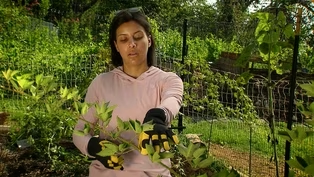
Video has Closed Captions
Clip: S26 Ep6 | 3m 12s | Increase your blackberry harvest with proper pruning techniques (3m 12s)
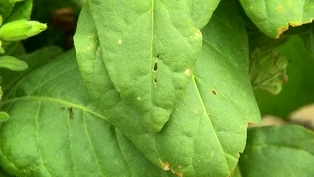
Video has Closed Captions
Clip: S26 Ep6 | 8m 14s | Learn about tobacco cultivated by indigenous peoples to use for ceremonial purposes (8m 14s)
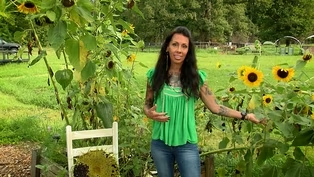
Video has Closed Captions
Clip: S26 Ep6 | 3m 16s | Brighten up your garden with sunflowers (3m 16s)
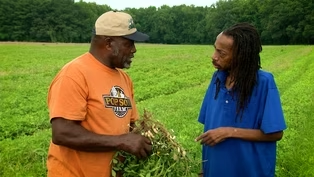
Video has Closed Captions
Clip: S26 Ep6 | 8m 18s | Meet a fourth-generation farmer that practices a traditional sun drying process to cure peanuts (8m 18s)
Video has Closed Captions
Clip: S26 Ep6 | 4m 31s | Learn how transplant lettuce and kale into your garden (4m 31s)
Video has Closed Captions
Clip: S26 Ep6 | 5m 4s | Discover Virginia’s role in shaping popular apple varieties (5m 4s)
Providing Support for PBS.org
Learn Moreabout PBS online sponsorship

- Home and How To

Hit the road in a classic car for a tour through Great Britain with two antiques experts.

 New Season





 New Episode
 New Episode


Support for PBS provided by:
Virginia Home Grown is a local public television program presented by VPM