
The Deal: Trump, Bukele & the Gangs of El Salvador
Season 2026 Episode 3 | 54m 23sVideo has Closed Captions
Examining Salvadoran President Bukele’s deal with President Trump to imprison U.S. deportees.
An examination of Salvadoran President Nayib Bukele’s deal with President Trump to imprison U.S. deportees, and what each leader stood to gain. FRONTLINE and the Salvadoran news outlet El Faro, now operating in exile, investigate Bukele’s tangled history with the gangs the U.S. says it is fighting.
Problems playing video? | Closed Captioning Feedback
Problems playing video? | Closed Captioning Feedback
Funding for FRONTLINE is provided through the support of PBS viewers and by the Corporation for Public Broadcasting. Major funding for FRONTLINE is provided by the Ford Foundation. Additional funding...
The Deal: Trump, Bukele & the Gangs of El Salvador
Season 2026 Episode 3 | 54m 23sVideo has Closed Captions
An examination of Salvadoran President Nayib Bukele’s deal with President Trump to imprison U.S. deportees, and what each leader stood to gain. FRONTLINE and the Salvadoran news outlet El Faro, now operating in exile, investigate Bukele’s tangled history with the gangs the U.S. says it is fighting.
Problems playing video? | Closed Captioning Feedback
How to Watch FRONTLINE
FRONTLINE is available to stream on pbs.org and the free PBS App, available on iPhone, Apple TV, Android TV, Android smartphones, Amazon Fire TV, Amazon Fire Tablet, Roku, Samsung Smart TV, and Vizio.
Buy Now
"Who Am I, Then?"
Explore this interactive that tells the stories of over a dozen Korean adoptees as they search for the truth about their origins — a collaboration between FRONTLINE and The Associated Press.Providing Support for PBS.org
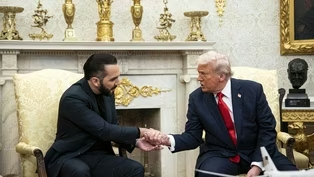
Learn Moreabout PBS online sponsorship♪ ♪ >> NARRATOR: It was three months since President Donald Trump had returned to office and begun his major immigration crackdown.
>> At the White House, the mood was celebratory as he welcomed the leader of El Salvador, Nayib Bukele.
>> We appreciate working with you because you want to stop crime, and so do we, and it's, uh, very, very effective.
And I want to just say hello to the people of El Salvador and say they have one hell of a president.
(camera shutter clicks) >> NARRATOR: Bukele, who'd once called himself the world's coolest dictator, had become a key player for Trump.
>> And we actually turned the murder capital of the world-- that was the... journalists call it.
>> Right.
>> Murder capital of the world into the safest country in the Western Hemisphere.
Sometimes they say that we imprison thousands.
I like to say that we actually liberated millions.
>> That's very good.
(laughter) Who gave him that line?
Do you think I can use that?
>> Yes.
(laughter) >> NARRATOR: Bukele was giving President Trump much more than a punchline.
He'd opened the doors of El Salvador's notorious prison-- known as CECOT-- for planeloads of deportees that the Trump administration had swept up and accused of being gang members.
>> CECOT is the largest prison in the Americas and is infamous for its harsh conditions.
>> The Trump administration deported more than 200 Venezuelan migrants from the U.S.
to El Salvador, placed in a notorious high-security prison.
>> NARRATOR: Despite revelations most of the men had no criminal convictions in the U.S.
or proven gang affiliations, and concerns about harsh treatment, both presidents touted it as a win.
>> It was pretty obvious what Trump was getting out of this deal.
(camera shutters clicking) It was much less obvious what Bukele was doing.
>> NARRATOR: Over the past year, "Frontline" and reporters from the El Salvador news outlet "El Faro" have been investigating what was behind the controversial deal.
>> La naturaleza del gobierno de Bukele es mantener en secreto cosas.
>> NARRATOR: And what Bukele stood to gain.
>> All you know about him is his propaganda.
The truth is quite different from what he says.
>> En esta imagen, ¿reconoces quién está encapuchado?
>> Bukele nos quiere presos por haber revelado algo que le molestó.
♪ ♪ >> ¿Saben qué?
Me tiene sin cuidado que me llamen dictador.
Prefiero que me llamen dictador a ver cómo matan a los salvadoreños en las calles.
>> Bukele nos ha declarado, a los periodistas de "El Faro", sus enemigos desde hace mucho tiempo.
>> Pero la realidad es que Bukele está tratando de encubrir su pasado.
La realidad es que necesita que Estados Unidos lo ayude a encubrir su pasado.
>> Y esa historia no la hemos terminado de contar todavía.
♪ ♪ ♪ ♪ >> NARRATOR: The roots of the deal between Presidents Trump and Bukele trace back to their first meeting.
(indistinct chatter in background) The two leaders were in New York for the United Nations General Assembly.
♪ ♪ Bukele was promising to help Trump with one of his signature issues: stemming the flow of immigrants into the U.S.
>> Bukele decides, you know, he is going to take responsibility for the issue of migration from El Salvador.
>> It's a great honor to be with the president of El Salvador.
>> And that's around the time where you start seeing Bukele coming into Trump's orbit, and connections forming between the Bukele team and, and Trump's world.
>> NARRATOR: The American president was also particularly impressed with the way Bukele was cracking down on El Salvador's notoriously violent gangs.
>> The president has done an incredible job with MS-13.
He realizes what a threat they are.
They have been very, very tough.
>> Both just have this sort of irreverence that I think appeals to people who see them as not the average politician.
And I think both respect, at the end of the day, more than anything, power.
And so, when they see others who have it, they respect that.
>> We're very happy to be here, and we're hoping that this, this meeting will only strengthen our relationship even more.
And I think it will, because, you know, we're-- President Trump is very nice and cool, and I'm nice and cool, too.
(laughter) >> Thank you very much.
>> Thank you.
>> NARRATOR: Bukele was emerging as one of Latin America's most popular leaders, building his reputation on being extremely tough on gangs.
♪ ♪ (alarm blaring, indistinct chatter) >> El Salvador nunca ha sido un país pacífico.
>> ¿Verdad?
Desde que yo comencé a ejercer periodismo, siempre ha sido El Salvador un país violento.
>> NARRATOR: Carlos Martínez is a reporter at El Salvador's premier investigative news outlet, "El Faro."
He and his brother, Óscar, have been reporting on Bukele and the country's gang problems for years.
>> Nunca había visto lo que pasó en 2015.
Aquello era peor que una guerra abierta.
♪ ♪ >> Las calles estaban llenas de cadáveres.
Las morgues en El Salvador ya no daban abasto.
>> NARRATOR: At the peak of the violence in 2015, El Salvador had the highest murder rate in the world.
(woman sobbing) The brutal MS-13 gang was battling its rival, Barrio 18.
>> One of the most dangerous countries on Earth.
A place where criminal gangs control entire neighborhoods.
>> NARRATOR: Bukele had just become mayor of the capital, San Salvador, the epicenter of the violence.
>> Cuando Bukele llega a la alcaldía de la capital, el país atravesaba probablemente uno de sus momentos más violentos de su historia.
Que no es poco decir en un país como El Salvador.
(applause) >> NARRATOR: At first, Bukele's approach to the violence was less confrontational, promoting social services and community building.
>> His political discourse was that we needed to have long-time solutions for those communities overtaken by gangs to have another kind of life, where kids would have more options than just be part of a gang or be killed.
In almost every single issue, he was very progressive.
(applause) We organize every year a Central American journalism conference.
When he was mayor of San Salvador, we invited him.
He came.
That talk in which he spoke was moderated by Carlos Martínez, one of our reporters.
>> Yo creo... que lo que tenemos en El Salvador es que el tejido social está roto... y lo que tenemos que hacer entonces es reconstruir el tejido social.
Que estos jóvenes tengan oportunidades y que el tema de la violencia no sea un tema que se va a solucionar con más violencia... >> NARRATOR: He focused on revitalizing the city center.
>> Este día, damos por finalizada la revitalización total del corazón del Centro Histórico de San Salvador.
(cheering, fireworks popping) >> NARRATOR: Crime and violence there dropped.
Buekele's popularity rose.
>> Que Dios los bendiga a todos.
Y que Dios bendiga a nuestro hermoso país, El Salvador.
Muchas gracias.
>> NARRATOR: And in 2019, after just one term as mayor, he ran for president.
♪ ♪ >> Lo primero que hace Bukele es presentarse como un outsider, que iba a romper con ese pasado corrupto que había administrado la democracia en El Salvador desde la guerra civil.
Y era un discurso que los salvadoreños se morían por oír.
Y de esa idea, Bukele construyó su imagen: "El Vengador".
Y consiguió transmitir este mensaje de una manera muy poderosa y la gente se lo compró a raudales.
Sacó más votos que el resto de los partidos juntos.
>> Ciudadano Nayib Armando Bukele Ortez... quedáis en posesión del cargo de presidente constitucional de la República de El Salvador.
(cheers and applause) >> La gente votó a Bukele en 2019 porque ya estaban hartos de las otras ofertas electorales.
Había que ser un loco para seguir votando por esos partidos políticos.
No solo nos habían convertido en uno de los países más homicidas del planeta, sino que se habían robado todo lo que se pudieron robar.
(thunder rumbling) >> NARRATOR: Within weeks of taking office, Bukele made a dramatic announcement.
>> El plan fue presentado ayer, es un plan completo... Hay elementos que no se pueden revelar evidentemente... Vamos a hacer valer el Estado donde el Estado debe de estar... Vamos a controlar los territorios donde más flujo de dinero le genera a las pandillas... >> NARRATOR: He was now promoting a tougher approach.
He vowed he wouldn't compromise or negotiate with the gangs.
>> Yo no he recibido ninguna comunicación de Mara Salvatrucha para buscar diálogo y tampoco estamos dispuestos a dialogar con grupos criminales.
>> Bukele vowed to be different than the leaders who had ruled El Salvador for decades, the leaders who had been, you know, convicted in bribery cases, who had committed graft, and who had been shown to actually be negotiating with the leaders of the powerful street gangs that ruled much of El Salvador.
He declares that he is going to tackle crime and fight the gangs with this new plan, the Plan Control Territorial.
The details of this plan are very opaque.
But what we know is that he's deploying more police and soldiers around the country.
(soldiers chanting) The country does start to get safer.
>> Policía.
>> La puerta.
>> NARRATOR: In the first months of Bukele's Territorial Control Plan, over 5,000 people were arrested; the murder rate hit historic lows.
To the reporters at "El Faro", these results seemed too good to be true.
>> We knew that there was something strange going on.
You can't become a president and the next day reduce so dramatically the homicide rates without something tricky going on.
>> NARRATOR: As the El Faro reporters started investigating, another investigation was taking place that would eventually help shed light on what was behind Bukele's crackdown.
In the U.S., federal authorities were fighting their own campaign against MS-13, which had taken root in many American cities.
>> MS-13, the notorious street gang responsible for the wave of violence that has terrorized this community.
>> MS-13 is an international crime cartel-- that's not an overstatement.
It's based in El Salvador; it has rapidly become one of America's largest and deadliest street gangs.
>> My name is Daniel Brunner.
I was a special agent for the Federal Bureau of Investigations.
My responsibility was MS-13 cases in the state of New Jersey.
MS-13 is one of the most extraordinarily violent gangs that's out there.
I've seen some horrible crime scenes in my years.
You had a quadruple homicide on Long Island.
You have homicides in New Jersey, in Virginia, Maryland.
>> This is now the tenth murder here in Nassau County since 2016 due to the gang MS-13.
>> NARRATOR: As in El Salvador, the U.S.
had a tough-talking president.
(applause) >> It is the policy of this administration to dismantle, decimate, and eradicate MS-13.
One by one, we're liberating our American towns.
>> I got a call in 2019.
This U.S.
Attorney said, "Hey, would you be "interested in joining this new task force "that we're putting together that is going to be taking out MS-13 from the top down?"
♪ ♪ Task Force Vulcan was created by Attorney General Barr under the direction of President Trump.
>> What we've been in here discussing with the president is Project-- Task Force Vulcan which is targeting the higher-level players in the MS-13 operations.
>> This is probably the meanest, worst gang anywhere in the world, the MS-13 group.
They're sick, they're deranged, and we're taking care of it.
>> NARRATOR: MS-13 members in America, they said, were receiving orders from the gang leadership in El Salvador-- many of whom had been thrown in prison there.
>> Taking out the leadership in El Salvador and bringing them to United States changes the entire dynamic of the organization.
There's leaders on the streets, and then there's leaders in jail.
We wanted them both.
>> Thank you very much.
>> All right, guys, let's go.
>> Our goal was to get them out of those jails, into U.S.
jails, cutting the head off the snake.
>> NARRATOR: Over the next year, Brunner and other agents worked with investigators in El Salvador to build cases to extradite the jailed MS-13 leaders.
It became a far-reaching effort.
>> The team was put together to be able to look at all MS-13 criminal activity, including political corruption, including their influence in government activities.
>> NARRATOR: Task Force Vulcan's investigation would soon intersect with "El Faro's" reporting.
>> Conocí a los agentes de Vulcano que estaban involucrados en El Salvador en la persecución de las pandillas.
Y esa gente estaba muy interesada en mi conocimiento del fenómeno de pandillas y en el bagaje que tenía investigando este fenómeno.
Y, a medida que pasaba el tiempo, conversábamos con distintas fuentes y, dentro de la embajada de los Estados Unidos, conversábamos con los agentes de Vulcano, con mi fuente... Un día... me llamó una fuente de la embajada de los Estados Unidos y me dice lo siguiente: "Creo que tengo algo que te interesa.
Necesito que lo recojas esta tarde."
Pero esa tarde yo no podía, entonces llamé a mi hermano Óscar y le digo: "Mira, Óscar, ¿vos podés moverte ya para donde está la fuente?"
♪ ♪ >> Yo llego donde esa fuente, en una colonia de lujo, y él en la calle me entrega un sobre manila.
Y, desde que salgo de esa colonia, noté que me venía siguiendo un carro.
Estábamos acostumbrados a que el organismo de inteligencia del Estado de El Salvador nos persiguiera siempre.
Yo doy varias vueltas en el redondel para quitarme el seguimiento y me lo quito y me voy.
Cuando llego a la casa y abro el sobre, no lo podía creer.
Sentí que un rayo me cruzaba el cuerpo.
♪ ♪ >> NARRATOR: Inside the envelope were surprising details about how Bukele had been getting his results.
>> Eran cientos de páginas de evidencia, desde las cárceles de El Salvador, de que el gobierno de Bukele estaba negociando con la Mara Salvatrucha.
Documentos del propio Gobierno de Nayib Bukele que revelaban, que explicaban, que detallaban y que nombraban quiénes estaban entrando a las cárceles para sostener un pacto con los líderes de la Mara Salvatrucha 13.
>> El día siguiente recibí una llamada de esa fuente diciéndome, a través de una tercera persona, que ya no lo volviera a contactar, que mi teléfono estaba pinchado y que, al parecer, él tenía seguimiento.
Eso es hacer una investigación bajo muchísima presión.
>> NARRATOR: The documents included prison records showing dozens of covert meetings between government officials and gang leaders since 2019; as well as intelligence reports and correspondences detailing deals for the reduction in homicides, political support, and prison privileges.
(camera shutter clicks) >> There was a pact between Bukele and the gangs.
That is the main reason behind the huge drop in homicide rates.
(indistinct radio chatter) It was also an electoral pact.
Part of the deal was to control the inhabitants of the communities the gangs controlled, to vote for Mr.
Bukele.
The gangs guaranteed Mr.
Bukele that Salvadorans would vote for him in exchange of some benefits.
♪ ♪ >> NARRATOR: In the prison logbooks, the reporters also found the name of Bukele's close aid: Carlos Marroquín.
>> Carlos Marroquín is a director of an institution called Social Tissue, which on paper, this is the institution in charge of reconstructing the broken tissue of these communities that were submerged by violence.
Carlos Marroquín, this is what our reporting tells us, has been one of the main links between Mr.
Bukele and the gangs.
He is the liaison with the gangs.
>> Para verificarlos, seguimos con fuentes de centros penitenciarios que nos confirmaron los ingresos, custodios... Llevamos los documentos para verificar su autenticidad.
Conseguimos fuentes dentro de las pandillas que nos confirmaran ese tipo de negociaciones.
>> En septiembre de 2020, publicamos: "Gobierno de Bukele lleva "más de un año negociando con la Mara Salvatrucha 13.
Apoyo electoral y reducción de homicidios".
La noche que publicamos ese material, tuvo decenas de miles de lecturas.
Después de esa publicación, Bukele reaccionó iracundo.
>> Entonces, ¿qué acreditamos?
Que El Faro mentía.
¿En dónde?
¡En su artículo!
Y en esos supuestos documentos, que no son documentos oficiales.
Son fotografías falsas de supuestos documentos oficiales.
>> Nos acusó de... de ser mentirosos, de estar trabajando para la oposición política.
Nos acusó de un montón de cosas.
>> Y van a ver que "El Faro" mintió.
Y yo puedo decir una cosa: El Faro no ha probar una de sus aseveraciones... Pero al pueblo salvadoreño, que es el que nos importa, les pregunto: Si mintieron aquí, ¿en qué están diciendo la verdad?
>> NARRATOR: The documents and "El Faro" reports contradicted what Bukele had been saying publicly and to the international media about his contacts with the gangs.
>> Would you ever negotiate with them?
>> No.
>> No.
Why not?
>> Well, because you are giving them... you are giving them legitimacy.
(camera shutter clicks) >> NARRATOR: Neither Bukele nor Marroquín nor anyone from the administration would agree to an interview for this film.
On local TV, Carlos Marroquín brushed off "El Faro's" reporting.
>> No hay pruebas reales, pues.
Todo lo que ellos han escrito o están diciendo está... Es un supuesto.
Eso es un supuesto.
>> NARRATOR: But the "El Faro" reporters later managed to interview two leaders of the Barrio 18 gang-- MS-13's main rival-- who'd fled the country and said they'd made deals with Bukele's allies for years, including to help get him elected mayor of San Salvador.
Mi nombre es Carlos Cartagena.
Pues, todos me conocen como Charli.
>> Charli, Carlos Cartagena, es uno de los más famosos pandilleros de El Salvador desde hace décadas.
>> Ellos pidieron el apoyo, pues, de nuestra gente, de nuestras comunidades, de nuestras colonias para poder elegirlo a él, ¿verdad?
Como alcalde.
>> ¿Cuánto dinero les entregaron por el respaldo?
>> Entregaron un cuarto de millón.
>> ¿Solo para ustedes?
>> No, eso era repartido.
Eso era repartido entre las dos pandillas.
>> El partido de Nayib Bukele, en ese entonces el FMLN, pagó, según Charli nos contó, para que obligaran a la población bajo su control a votar por Nayib Bukele para que fuera alcalde de San Salvador y por el candidato presidencial de ese partido.
(applause) >> Además de entrevistar a Charli, nosotros entrevistamos a otro líder de Barrio 18: Liro Man.
Él lo único que nos pidió es que no reveláramos su nombre real ni su rostro porque cree que, en su circunstancia actual en donde está, eso lo podría afectar.
>> NARRATOR: The two gang leaders told "El Faro" that after Bukele became president in 2019, they were allowed to hold meetings with their leaders in prisons.
>> Sí.
No, es que mira, decían de una vez al mes, nosotros quedamos que una vez al mes iban a entrar.
Y, a Izalco, dos veces al mes.
>> ¿A usted no le revisaban las bolsas?
>> Nada... Ni nos-- Ni, mira-- No nos revisaban ni para entrar ni para salir.
>> NARRATOR: "El Faro" reporters showed one of the gang leaders pictures they'd obtained of masked men entering the prison.
>> En esta imagen, ¿reconoces quién está encapuchado?
>> Pues, este es Marroquín, viejo.
>> ¿Él es Carlos Marroquín?
>> Sí.
>> En esta imagen, si la puedo expandir, ¿a estos personajes los reconoces?
>> Claro, este soy yo... >> NARRATOR: The gang leaders confirmed that their pact with Bukele and his associates like Marroquín included agreements to reduce homicides.
>> ¿Cuál era el acuerdo con Bukele sobre asesinatos?
>> Pues, era frenarlos, pues.
>> ¿Pero ustedes cómo podían castigar al que violaba ese tipo de acuerdos?
>> Si hacías algo que no debías hacer, pues... Hay formas en las cuales nosotros nos regíamos, pues, en la pandilla, ¿verdad?
Habían reglas... Entonces había gente que, pues, la (bleep), pues, si había que cobrar, se le cobraba... >> NARRATOR: If there was a killing, the other gang leader said, Marroquín had given advice on how to keep it off the radar.
>> No te voy a decir que nunca se dio un homicidio, pero... Se dijo con Marroquín: "Si se hace algo... Sin cuerpo, no hay delito".
Con eso te digo todo.
Sin cuerpo, no hay delito.
>> NARRATOR: "El Faro" reporters repeatedly tried to talk to Marroquín, but he didn't respond to them.
>> When Bukele sustained this pact with the gangs, he told all the Salvadoran population that the violence had reduced because of the efficiency of his security plan.
Well, that was not true.
>> NARRATOR: Not long after "El Faro" published its story about Bukele's relationship with the gangs, prosecutors in the U.S.
filed an indictment against MS-13 leaders on narco-terrorism charges, alleging they directed the gang's American operations from prison cells in El Salvador.
>> I was part of the team that put together the indictment.
At that time, once we charged them, then we put forward the documentation requesting them to be extradited to the United States.
♪ ♪ >> NARRATOR: Brunner said he and his colleagues hoped Bukele would hand over the gang leaders they were seeking.
>> Yes, you can have these top 14 members, because they're the leaders.
Let's look good for the world that we want to rid MS-13, getting them out of the equation.
So we thought that it would work in our favor.
>> NARRATOR: But then, events in El Salvador would complicate the effort.
>> The United States has expressed concern after El Salvador's National Assembly dismissed the attorney general and five judges from the constitutional court.
>> NARRATOR: Bukele was in the midst of consolidating his power; he and his allies forced out officials who had been working with Brunner and Task Force Vulcan, including the country's attorney general who himself was investigating Bukele's ties to gangs.
They also replaced key judges with Bukele loyalists on the nation's top court, which has the final say in approving extraditions.
>> When Bukele changed the structure of the Supreme Court, that's really where it changed the entire relationship with Vulcan and with how we would get our results.
We knew that the door was pretty much shut from getting anybody out of El Salvador.
>> NARRATOR: ProPublica reporters T. Christian Miller and Sebastian Rotella have written about the fight over the extraditions, and Bukele's dealings with El Salvador's gangs.
>> We had sources both in the United States and sources who were very close to the Supreme Court in El Salvador who were telling us that the El Salvadorean Supreme Court justices were receiving calls from Bukele's office essentially saying, "Do whatever it takes to stop extraditions."
>> What the gangs were getting was a deal that was more sophisticated and more expansive than the deals that previous governments had cut.
And what the gangs ask for is-- very insistently-- is protection from extradition.
>> NARRATOR: Bukele's government insisted the gang leaders needed to first face justice in their own country.
But in Washington, where President Biden was now in office, there was growing tension with Bukele.
>> He stalled or completely killed at least a dozen extradition requests.
And that was something that was concerning for us.
>> NARRATOR: Juan Gonzalez was one of Biden's senior advisors on El Salvador.
He said he was concerned about the reports of Bukele's deal with the gangs.
>> The agreement that he entered with the gangs allowed the gang leadership to continue to operate.
So it was almost like a detente between Bukele and the gangs.
>> NARRATOR: In late 2021, The Biden administration ordered sanctions on two of Bukele's closest associates-- including Carlos Marroquín-- for negotiating with the gangs.
Bukele responded, saying the allegations were an obvious lie.
>> The U.S.
government is really putting the pressure on Bukele over extradition, over democracy, over a lot things.
And one of the main sort of points of contention is this extradition request for one of the top people in MS-13, which is Élmer Canales Rivera, also known as Crook.
There's an extradition notice for him, there's an Interpol red notice for him.
>> NARRATOR: Élmer Canales Rivera was one of the imprisoned gang leaders named in the documents obtained by "El Faro" as having helped make the pact between MS-13 and the Bukele government.
>> Crook es fundador de la cúpula de la Mara Salvatrucha 13 en El Salvador, que se conoce como La Ranfla.
>> Crook era uno de los líderes más violentos de la Mara Salvatrucha 13.
Alguien que se jactaba de haber asesinado a algunas de sus víctimas con sus propias manos.
>> NARRATOR: As the U.S.
pressed Bukele to extradite him, there was a startling development.
>> Suddenly, Crook, who is in prison in El Salvador, disappears.
>> Nosotros obtuvimos documentos donde el juez que llevaba la causa de Crook preguntaba: "¿Dónde está Crook?"
>> Lo conseguimos rastrear porque la novia era muy, digamos, fan de usar redes sociales.
Ella sacaba fotografías y videos donde aparecía Crook, e intentaba tapar su cara con emoticones.
Pero conocíamos al dedillo los tatuajes de ese hombre.
Entonces, aunque le pusiera un osito a la cara de Crook, sabíamos que era él.
>> Cruzó a Guatemala y comió en un restaurante cerca de la frontera.
Logramos comprobar, gracias al menú que estaba sobre la mesa, en qué restaurante de Guatemala pasó comiéndose un cóctel de camarones.
>> Decidimos seguir, en silencio, esa cuenta hasta que el rastro se pierde en México.
El asunto es que luego supimos otra cosa.
>> NARRATOR: "El Faro" reporters obtained a secret recording made by gang members of Carlos Marroquín, saying he'd personally helped Crook, whom he called, El Viejo, "The Old Man," get out of prison.
>> Y yo al Viejo lo que saqué de adentro, brother, en una forma de ayudarlos a todos y demostrarles mi lealtad y confianza, pues.
Yo mismo lo fui a traer allá y yo mismo lo llevé hasta Guatemala... >> Esta es la confesión de un agente formal del gobierno de El Salvador que llevó a un pandillero miembro de la cúpula de la Mara Salvatrucha, y lo liberó en Guatemala a sabiendas de que debía 40 años en El Salvador, y a sabiendas de que el Gobierno de los Estados Unidos lo estaba requiriendo en extradición.
♪ ♪ >> NARRATOR: The "El Faro" reporters tried to talk to Marroquín about the recording but he didn't respond.
A prominent member of Bukele's party in the Congress has cast doubt on its authenticity.
>> Si este hombre estaba preso, ¿cómo quedó libre?
¿Quién le ayudó?
Está el audio de Carlos Marroquín diciendo que lo llevó a Guatemala.
Eso... >> Bueno, ellos dicen que es el audio de él.
Yo te digo, a mí... >> Aún no entendemos exactamente por qué Bukele liberó a Crook.
Tenemos una hipótesis, y la hipótesis es que él liberó a Crook para que controlara las ansiedades de las estructuras en las calles y les ordenara mantener el pacto de reducir los homicidios.
Pero si esa era la misión de Crook, la misión de Crook falló rotundamente.
>> NARRATOR: By 2022, gang violence was flaring again in El Salvador.
>> Ese pacto tuvo sus altibajos.
Porque cuando las pandillas se sentían, por alguna razón, incómodas o pensaban que el pacto no avanzaba como querían, mataban.
Esa era su moneda de cambio: la muerte.
Siempre lo fue.
>> NARRATOR: It reached a boiling point: over one weekend, after the gang claimed some of its members, who they believed should have been protected by their deal with the Bukele government, were arrested.
>> Murieron 87 personas en un solo fin de semana sin ton ni son.
La mayoría no eran pandilleros.
No habían sido parte de la guerra entre pandillas.
>> En solo tres días, se han producido cerca de 80 asesinatos, 62 de ellos, ayer sábado.
>> El sábado 26 de marzo de 2022 fue el día más violento de toda la posguerra salvadoreña.
>> Era la Mara Salvatrucha intentando enviar un mensaje al gobierno, diciendo: "Nosotros podemos subir y podemos bajar los asesinatos a voluntad".
>> NARRATOR: Amid the violence, MS-13 gave the government 72 hours to release the gang members it had arrested.
In a recorded phone call obtained by "El Faro," Carlos Marroquín told a gang leader he had relayed the ultimatum to Bukele, who he referred to as "Batman."
>> Yo ya le tiré a Batman que hay 72 horas para dar una respuesta.
Él no se lo tomó a bien, se lo tomó a mal como que "no vengas a amenazarme," no sé qué.
Entonces la onda esta en que lo que Batman me dijo, ‘vamos a ver como reacciona en las próximas horas y yo te aviso si nos reunimos mañana.'
>> Y Bukele, que hay que reconocer que a muchas cosas reacciona rápidamente decide convocar a su asamblea legislativa que él ya controlaba plenamente, y ordenarles que establezcan un régimen de excepción.
Y entonces termina el pacto.
>> Esta noche, me estoy sumando para poder dar nuestro voto a este régimen de excepción.
>> ...esos terroristas, esos criminales, van a pagar las consecuencias.
>> Queda aprobado el proyecto de decreto que contiene régimen de excepción.
(cheers and applause) >> NARRATOR: The state of exception was an emergency measure granting Bukele expanded powers-- among them, the ability to detain gang suspects for long periods without trial or even charges.
♪ ♪ >> Bukele promete que iba a terminar con las pandillas con el régimen de excepción.
Y en esas primeras semanas, se capturaron a miles de salvadoreños.
Las cárceles se llenaron de gente.
De pandilleros, claro.
Y a inocentes, a un montón.
He sent the police and the army to carry on massive incarcerations.
So police officers needed to fulfill quotas of arrested people, without a judicial order.
>> Sin embargo, desarticuló a las pandillas a través de esa embestida.
La pesca con dinamita funcionó.
>> Entramos caminando a comunidades que te digo, antes nos hubieran matado por entrar caminando de esa forma.
Sin pedirle permiso a nadie, sin negociar con nadie, sin avisarle a nadie.
Y ahí, en todas las comunidades, la gente nos dijo cuando les preguntamos: "¿En el régimen se han llevado a gente inocente?"
En las 14 nos dijeron "sí".
"¿Y está feliz con el régimen?"
"Sí".
La gente estaba dispuesta a que se llevaran a unos inocentes, a cambio de que ya no hubiera pandillas.
Y yo eso lo puedo entender.
Nosotros, como reporteros de "El Faro", sabemos lo que las pandillas le hicieron a esa gente.
Sabemos cómo descuartizaron.
Lo sabemos.
>> The state of exception is an emergency measure that our constitution considers for a month with the possibility of being renewed.
We are entering our fifth year under a state of exception.
It means that it has been renewed month after month by Congress.
>> NARRATOR: Some of the people arrested ended up in CECOT, Bukele's new "Terrorism Confinement Center."
♪ ♪ >> Bukele shows off these new prisoners like the spoils of war.
He produces these slick social media videos... ...showing hundreds of guys in prison garb... ...crouched in humiliating positions.
That imagery really goes global.
>> President Bukele is one of the most popular leaders in the entire world.
>> NARRATOR: As proof of his success, Bukele even welcomed the Miss Universe pageant to the once-violent city of San Salvador.
>> Please put your hands together for President Bukele!
(cheers and applause) >> NARRATOR: But also during this time in 2023, prosecutors in the U.S.
had unsealed a second indictment that echoed much of "El Faro's" reporting on the pact Bukele had made with MS-13, including the role of Bukele's director of social fabric, Carlos Marroquín.
>> The second major indictment by Task Force Vulcan was released in February of 2023-- this included the guys who actually would execute and, and communicate the orders from the Salvadoran prison to different gang groups in the United States.
Um, this document is really, for us, was really interesting because it really spells out in very clear terms that the U.S.
government believes that there's a, there's a truce going on, or a negotiation going on between the Bukele government and the MS-13 gang.
"MS-13 leaders agreed to reduce "the number of public murders in El Salvador, "which politically benefited the government of El Salvador "by creating the perception "the government was reducing the murder rate.
"When, in fact, MS-13 leaders continued to authorize murders where the victim's bodies were buried or otherwise hidden."
>> NARRATOR: Bukele didn't publicly respond to the indictment, but it further strained relations with the Biden administration.
>> I think that during the Biden years, El Salvador and the United States had the lowest point in the two countries' relationship since... as far as I can remember.
>> If it were known that Bukele, portraying himself as a law and order candidate, was sending his people to go and negotiate with the very people he was supposed to be cracking down on, it could also result in criminal charges, because the Salvadoran Supreme Court had designated MS-13 as terrorists.
And there was any likelihood that if Bukele leaves office and leaves government, that the incoming government would pursue him with criminal charges.
>> NARRATOR: Along with the indictment, the U.S.
was able to arrest key MS-13 fugitives who'd left El Salvador.
>> Élmer Canales Rivera, alias "Crook," un peligroso e influyente cabecilla de la mara salvatrucha, fue capturado recientemente en México.
>> NARRATOR: After two years on the run, Élmer Canales Rivera-- the MS-13 leader known as Crook-- was finally captured.
>> The U.S.
and the Mexican authorities have been working very closely to pursue a number of the MS-13 leaders who were active in Mexico, and he is arrested in Tapachula near the border with Guatemala and he's brought to Houston, where the U.S.
takes him into custody.
>> It was something that... you know, we celebrated, when the Department of Justice and Vulcan actually were able to kind of engineer this.
>> NARRATOR: He was charged with orchestrating murders and drug trafficking in the U.S.
and pled not guilty.
But there was much more behind his arrest.
♪ ♪ >> According to people familiar with the matter, once he was in U.S.
custody, Crook provided recordings and videos about the deal-making that happened between the El Salvador government and MS-13.
>> NARRATOR: "Washington Post" reporter John Hudson broke the story about Crook becoming an informant.
>> Crook provided an incredible amount of information to the United States government about the allegedly corrupt deals between MS-13 and the El Salvador government in exchange for the vast reduction in violence in the country.
>> Desde ese momento, Estados Unidos tiene en sus manos, y todavía a día de hoy lo tiene en sus manos a la prueba viviente de que el gobierno de Nayib Bukele negoció con un grupo que según Estados Unidos es un grupo terrorista transnacional.
Crook es la prueba viviente de eso.
Si en algún momento Estados Unidos quisiera enterrar a Bukele en un juicio, su mejor opción es Crook.
♪ ♪ >> NARRATOR: In 2024, amid the increasing evidence of Bukele's past dealings with the gangs, he was re-elected in a landslide.
(cheers and applause) And though his relationship with the Biden administration had been strained, he had other influential American allies who would soon become even more important.
>> His second inauguration is like a who's who of the MAGA elite.
You have Donald Trump Jr., Tucker Carlson, all of these people who are so essential to kind of crafting the MAGA narrative in the U.S.
have come to El Salvador.
>> If you can fix El Salvador, what are the lessons for the rest of us?
What did you do first?
>> Well, of course, you cannot do anything if you don't have peace.
>> All right guys, we got the whole crew here.
We are now in El Salvador, we got the police escort going.
>> Bukele has bet his future, really, on his alliance with the Trump Republicans.
>> Let's make America and El Salvador great again!
>> And that bet pays off because Trump is reelected... >> Thank you very much, everybody.
Well... >> ...comes into office, and instead of the United States that is criticizing Bukele for what he's doing, he now has a partner in the United States.
>> We will begin the process of returning millions and millions of criminal aliens back to the places from which they came.
>> Trump's promised a closed border and mass deportations.
Many are wondering what steps will he take to make good on his word.
>> NARRATOR: Within weeks of Trump taking office, Bukele saw an opportunity that could help him and the American president.
Secretary of State Marco Rubio was traveling through Central America to gain support for the administration's immigration efforts.
He stopped in El Salvador to meet Bukele.
>> They spent a lot of time together, they delivered statements together, and Bukele even invited him to his lake house.
>> NARRATOR: Reporter John Hudson traveled with Rubio to El Salvador.
>> Bukele made an extraordinary offer.
He said he was willing to use his mega prison, CECOT, to house almost anyone that the United States wanted to deport to El Salvador.
>> He has agreed to accept for deportation any illegal alien in the United States who is a criminal, from any nationality, be they MS-13 or Tren de Aragua, and house them in his jails.
>> NARRATOR: The Trump administration jumped at the offer.
But Bukele wanted something, too: the return to El Salvador of nine indicted MS-13 leaders in U.S.
custody, including the gang-leader- turned-informant, Crook.
>> Rubio is trying to seal the deal, and he mentions that he is under pressure from the president.
Bukele at this moment has maximum leverage over the United States.
And he says to Marco Rubio, "I need nine MS-13 members "in U.S.
custody in order for this deal to take place.
"You need to give me your word that I'm gonna get these nine men."
♪ ♪ Rubio then says to Bukele, "You have my word, but there's a problem.
"Some of the MS-13 members you're asking for "were actually informants of the United States government.
And as informants, they enjoy protective status."
According to officials familiar with these conversations, Rubio is promising him the United States will do this deal, he will get his men, but it is going to take a little bit of time.
>> NARRATOR: On March 16, planeloads of deportees from the U.S.
began arriving in El Salvador.
>> The Trump administration deported more than 200 Venezuelan migrants from the U.S.
to El Salvador.
El Salvadoran president Nayib Bukele posted a video on X showing them arriving and being taken into custody.
>> Placed in a notorious high-security prison... >> NARRATOR: President Trump had gotten what he wanted.
And among the mostly Venezuelan men being ushered into CECOT was a sign Bukele was starting to get what he wanted, too.
>> Cuando llegan los primeros tres vuelos con venezolanos deportados, los periodistas salvadoreños que hemos cubierto pandillas desde hace años, nos quedamos anonadados cuando vimos que uno de esos hombres hincados era César Humberto Larios.
Greñas.
>> NARRATOR: Greñas was a founding member of the MS-13 leadership, and his capture in 2024 was touted by U.S.
authorities as a major achievement.
But now, the Justice Department had dropped its case against him, citing "sensitive and important foreign policy considerations."
>> It was a deal within a deal.
You had, on the surface, a deal where Trump sent deportees to Bukele's prison.
But in fact, the U.S.
was sending back a criminal who Bukele wanted in El Salvador to protect his story, and to hide information about the secret negotiations he had had with gangs in his country.
>> Los quiere de vuelta en El Salvador para silenciarlos en un eventual juicio donde su nombre aparezca vinculado a la Mara Salvatrucha.
>> NARRATOR: After Greñas's return, Bukele said it would help El Salvador finalize intelligence gathering and go after the last remnants of MS-13.
No one from the Trump administration would agree to an interview about its deal with Bukele, but Secretary Rubio has defended the Salvadoran president.
>> You couldn't even live in El Salvador.
You couldn't walk the streets of El Salvador.
Now it's one of the safest countries in the region.
That's why President Bukele has, you know, a 90-something percent approval rating.
>> What did I think when I saw Greñas get off that plane?
I was sad.
I was sad because I knew that was a lot of hard work that we did for Vulcan.
If we're sending now the leaders, which Vulcan captured, we're sending them back to El Salvador, we no longer get access to that wealth of information, that intelligence, those networks, finding out how it worked.
And my concerns were the other Vulcan captures, the other MS-13 leaders that are still here in the United States.
I'm afraid that they'll end up on a plane and, and end up going back, too.
>> NARRATOR: After Greñas was sent back, a federal judge blocked, for now, the administration's effort to release another MS-13 leader captured by Vulcan.
The fates of Crook and the other men Bukele requested be released remain unclear.
>> I think that this is still a very hot issue for Mr.
Bukele, because Mr.
Trump is not going to be there forever.
A new administration can come that doesn't see these kind of agreements with very good eyes, and the gang members still have the possibility of testify the details of their pact with Mr.
Bukele.
>> NARRATOR: President Nayib Bukele's state of exception is still in place.
>> Hemos vencido a la pesadilla que nos aterrorizaba.
Ahora, vamos a construir el país que soñamos.
>> NARRATOR: More than 90,000 people have been arrested, many still awaiting trial.
>> ¿Saben qué?
Me tienen sin cuidado que me llamen dictador.
(cheers and applause) Prefiero que me llamen dictador a ver cómo matan a los salvadoreños en las calles.
>> NARRATOR: Bukele has also taken a hard line on journalists, like those at "El Faro," who first began reporting on his dealings with the gangs.
>> La oposición ha convertido a la manipulación en su principal estrategia y el "periodismo" es una de sus principales armas.
♪ ♪ >> NARRATOR: While at a journalism conference in Costa Rica, the Martínez brothers and colleagues were warned they could be arrested if they returned to El Salvador.
♪ ♪ >> Vaya, mire.
Nosotros ya habíamos tomado la decisión de adentrar esta tarde a El Salvador.
Pero al cerrar el Foro Centroamericano de Periodismo, después del último evento, un oficial de una embajada importante nos aseguró que dos fuentes distintas le aseguraron que había un despliegue policial desde anoche en el aeropuerto para capturarnos.
(bleep) >> Todos andamos grises ahora.
Porque todos estamos cayendo en cuenta que en este mismo momento que estoy hablando con vos está comenzando mi exilio definitivo del país, y, probablemente, el de todos mis colegas del periódico.
Y esa es una (bleep) que cuesta aceptarla porque... Porque en mi cabeza, y en la de todos, pues, los que íbamos a volar ahora, hoy en la noche íbamos a estar con nuestras familias o en la casa o en... Y la cosa es caer en cuenta de que eso se acabó.
Nadie se despierta, digo, preparado para asumirse un exiliado y asumir que, muy probablemente, volverás a ver a tu país siendo un viejo.
>> Yo creo que siempre voy a creer que es valioso que la gente, en lugar de no saber, sepa.
>> No traigo buenas noticias.
No son tiempos luminosos ni prósperos.
Para el periodismo centroamericano, las cosas han empeorado.
Vamos a seguir revelando.
Vamos a seguir descubriendo.
Y yo estoy convencido, espero no ser naif en esto, de que dentro de algún tiempo voy a poder volver a mi país a seguir haciendo lo que hago, que es periodismo.
♪ ♪ >> NARRATOR: Go to pbs.org/frontline for more reporting from our partners at "El Faro."
>> There was a pact between Bukele and the gangs.
That is the main reason behind the huge drop in homicide rate.
>> NARRATOR: And for more of our coverage of the region.
See more about threats to journalism around the world.
Connect with FRONTLINE on Facebook and Instagram and stream anytime on the PBS app, YouTube or pbs.org/frontline.
Captioned by Media Access Group at WGBH access.wgbh.org >> For more on this and other "FRONTLINE" programs, visit our website at pbs.org/frontline.
♪ ♪ FRONTLINE's "The Deal" is available on Amazon Prime Video.
♪ ♪
"The Deal: Trump, Bukele & the Gangs of El Salvador" - Preview
Video has Closed Captions
Preview: S2026 Ep3 | 31s | Examining Salvadoran President Nayib Bukele’s deal with President Trump to imprison U.S. deportees. (31s)
Providing Support for PBS.org
Learn Moreabout PBS online sponsorship
- News and Public Affairs

Top journalists deliver compelling original analysis of the hour's headlines.

- News and Public Affairs

Amanpour and Company features conversations with leaders and decision makers.












Support for PBS provided by:
Funding for FRONTLINE is provided through the support of PBS viewers and by the Corporation for Public Broadcasting. Major funding for FRONTLINE is provided by the Ford Foundation. Additional funding...